
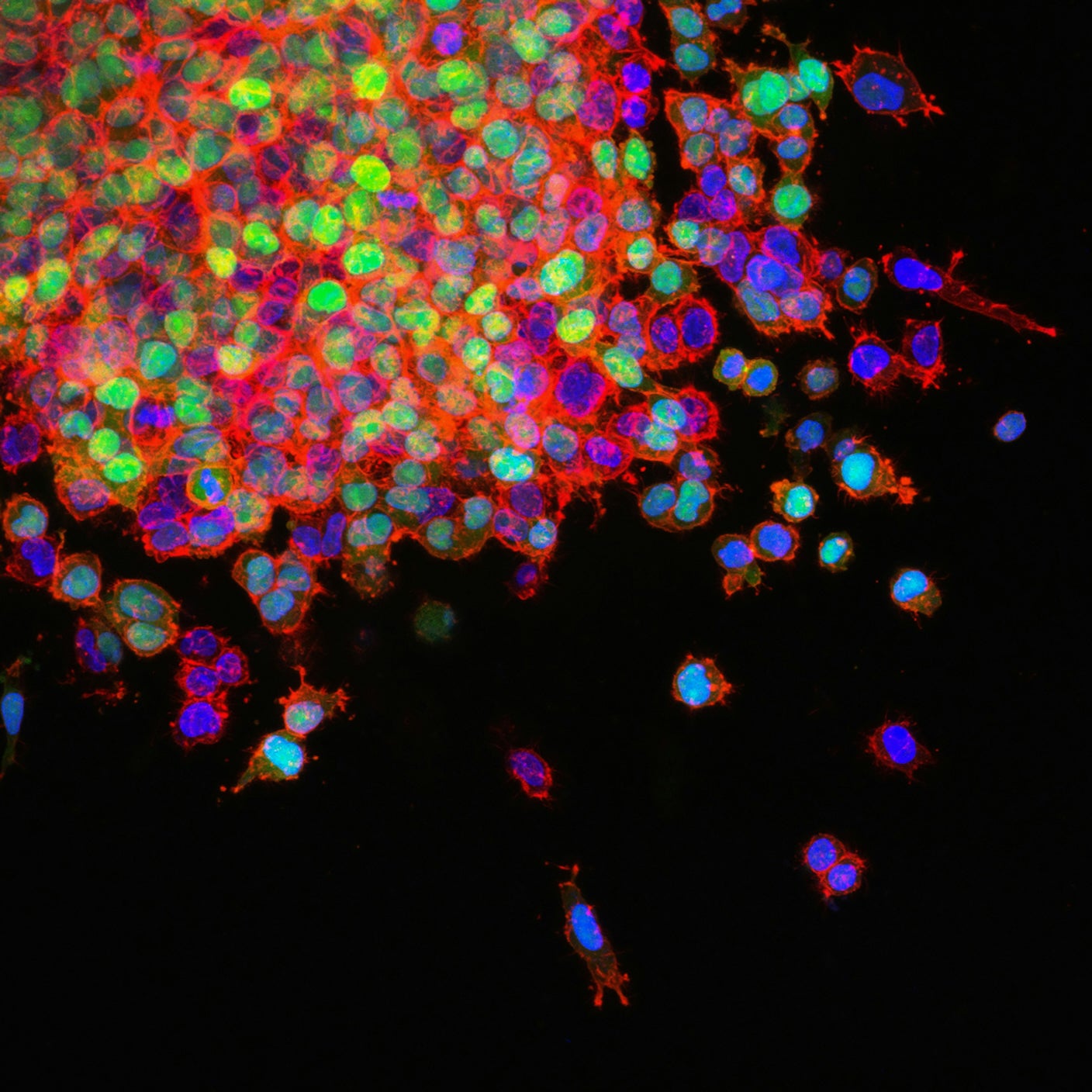
The boy, whose liver cancer had spread to his lungs, suffered no dangerous side effects and remained cancer-free a year later.
At just three years of age, the boy had already been through the medical ringer.
A tumor roughly the size of a large orange had invaded his liver and spread to his lungs. Multiple surgeries and rounds of chemotherapy temporarily cleared the cancer. But it rapidly came back.
With few options left, his parents enrolled him in an experimental CAR T cell therapy trial. The approach, which involves genetically reprogramming immune cells, has transformed the treatment of stubborn blood cancers. But when it comes to solid tumors, including liver cancer, CAR T has fallen frustratingly short.
The trial, run by Baylor College of Medicine in Texas and collaborators, is testing CAR T cells specifically engineered to hunt down and destroy cancer hidden in organs. The cells carry genes that help them grow and persist and a “kill switch” to rein them in. They’ve shown promise in mice, but treating a toddler, already weakened by grueling interventions, was a gamble.
It paid off. After two infusions of CAR T cells made from the boy’s own immune cells, his cancer disappeared. A biomarker associated with liver cancer plummeted, and he experienced no dangerous side effects. A year later, he remained cancer-free. The story of his recovery was published this month in the New England Journal of Medicine.
Although it’s just a single clinical case, the results show “a durable complete response in a chemotherapy-resistant solid tumor can be achieved entirely in the outpatient setting without systemic toxicity,” study author David Steffin at Texas Children’s said in a press release.
If the benefits hold up in other patients—including those with larger or faster-growing tumors—the approach could help banish several types of solid tumors that have so far evaded treatment. The trial is actively recruiting participants between one and 21 years old, with an initial goal of testing up to 30 people. If successful, it could change the course of many lives.
Broader Aim
Solid cancer has long been CAR T’s nemesis.
The treatment reprograms a patient’s immune cells to recognize and attack cancer cells. In current FDA-approved therapies, doctors extract T cells from a patient’s blood and genetically equip them with “hooks” that latch onto targets, known as antigens, on the surfaces of certain cancer cells.
A brief round of chemotherapy then depletes the patient’s existing immune cells, making room for the enhanced ones. Once infused back into the body, CAR T cells find and kill their targets.
Scientists have steadily refined the technology. Some are developing ways to manufacture CAR T cells directly inside the body, potentially slashing time and cost. Others are pursuing a broader goal: Solid cancers. These account for roughly 85 percent of cancer diagnoses, but they’re notorious for slipping past first-generation CAR T cells.
Part of the reason they’re so evasive is solid cancers often carry multiple types of antigens. Targeting just one can leave behind residual cancer cells that eventually regrow. And unlike cancerous blood cells, which freely roam our bloodstream, solid tumors are buried inside organs and surrounded by healthy tissue. CAR T cells have to tunnel through this physical barrier.
Tumors also pump out a menagerie of chemicals that reshape their local environment. Some spur their expansion; others protect them from immune cell attacks—including CAR T—by depriving the cells of signals and nutrients they need to survive.
With their new CAR T cells, the Baylor team tackled several of these shifty maneuvers at once.
Gen 2.0
Finding the right antigen was the first hurdle. Previous work showed glypican-3, or GPC3, fit the bill. This antigen coats several types of cancer cells—including the boy’s hepatoblastoma—spurring them to grow out of control. But the protein is hardly present in healthy cells, making it an appealing target.
GPC3-targeting treatments have already had some success. Two clinical trials using antibodies found that inhibiting the protein is relatively safe in patients with an advanced form of liver cancer. But the antibodies struggled to reach deeper, hidden cancer cells, and the patients didn’t completely recover.
CAR T cells, in contrast, can move through dense tissues. In mouse models of liver and lung cancer, GPC3 CAR Ts safely slashed their cancer burden, while a small clinical trial in people with liver cancer backed up those safety findings.
To give their CAR T cells a better chance in the cancer chemical wasteland, the team added two more functions to the original GPC3 CAR T recipe. One genetic alteration equipped them to make IL-15 and IL-21, molecules that help the cells survive and expand. The second added a “kill switch” for safety in case the cells expand out of control. Once activated by a drug, they self-destruct without harming nearby tissues.
All these upgrades resulted in a therapy that gave the toddler and his family hope. His tumors—both the original hepatoblastoma and ones that had spread to his lungs—tested positive for GPC3.
He received two CAR T infusions made from his own cells, eight weeks apart. Neither infusion required a hospital stay. After the first dose, the liver tumor shrank, suggesting a partial response. After the second, imaging showed tumors in both organs disappeared and stayed away at least a year.
“This marks a durable, 12-month disease-free status,” wrote the team.
The cells worked fast and stuck around. By four weeks, they had already infiltrated his liver, and signs of the engineered cells remained detectable in his blood nine months after treatment. Despite the risk of side effects, such as neurotoxicity or a potentially deadly runaway immune activation, the boy never experienced serious toxicity from the treatment.
But results in one child aren’t enough to know whether the cells will work for others. And his case may be unusual. CAR T cells naturally swarm the liver and lungs after infusion into the bloodstream, which might have been especially helpful. More follow-ups will also be needed to track long-term risks, such as the engineered cells expanding out of control. If that happens, can the built-in kill switch rein them in?
Still, the results are a proof of concept for a strategy that could overcome some solid tumor defenses. Given liver cancer is the third leading cause of cancer-related deaths around the world, the therapy could make a substantial impact. A related trial using similarly engineered cells is also underway.
The post Three-Year-Old Boy’s Metastatic Cancer Disappears After Two Shots of Experimental Cell Therapy appeared first on SingularityHub.
* This article was originally published at Singularity Hub


0 Comments